General fault
Text off the screen
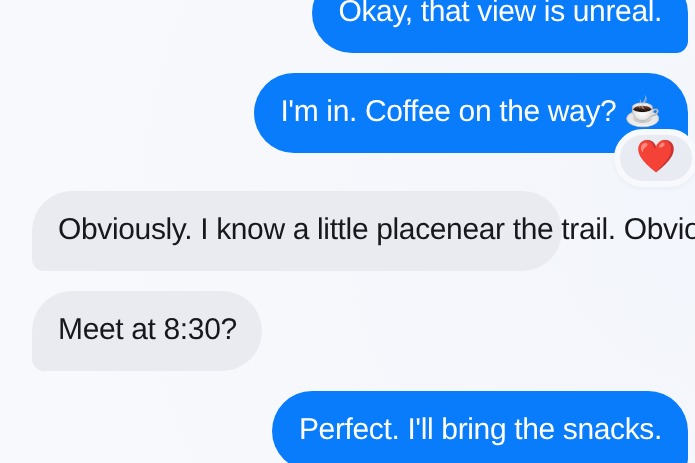
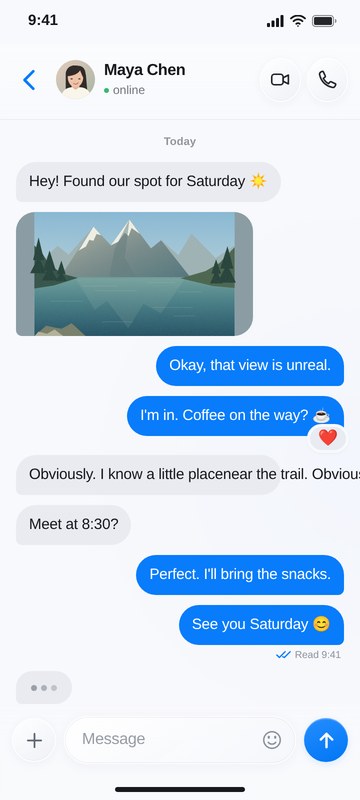
iOS chat page
the engine's exact label as corner marks
iOS chat page
the engine's exact label as corner marks
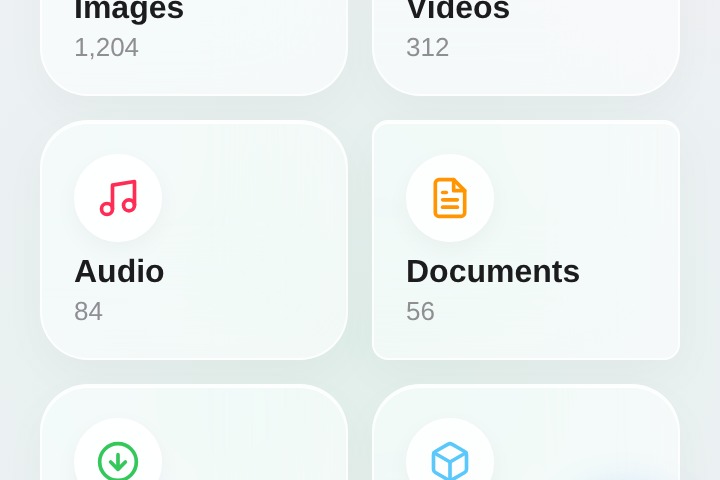
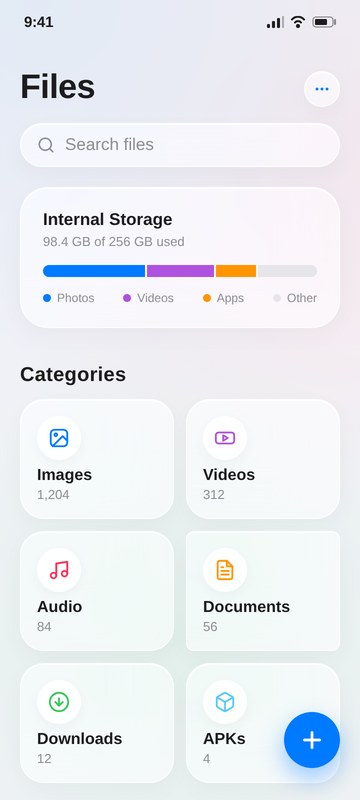
iOS files page
the engine's exact label as corner marks
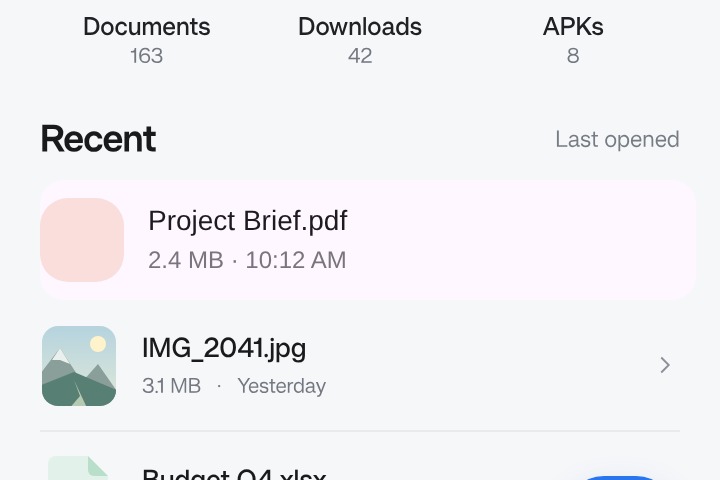
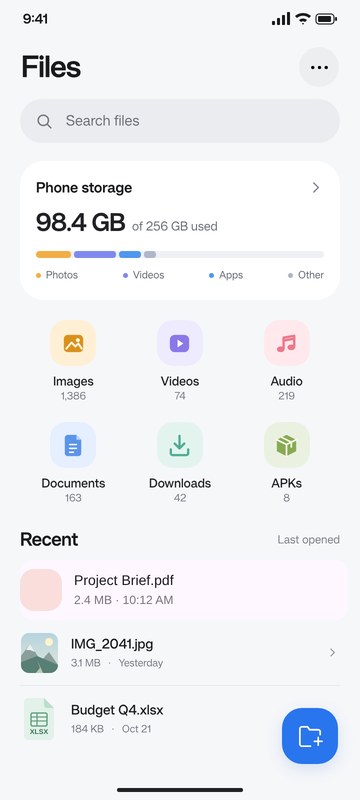
ColorOS files page
the engine's exact label as corner marks
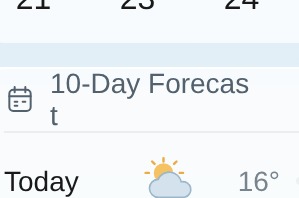
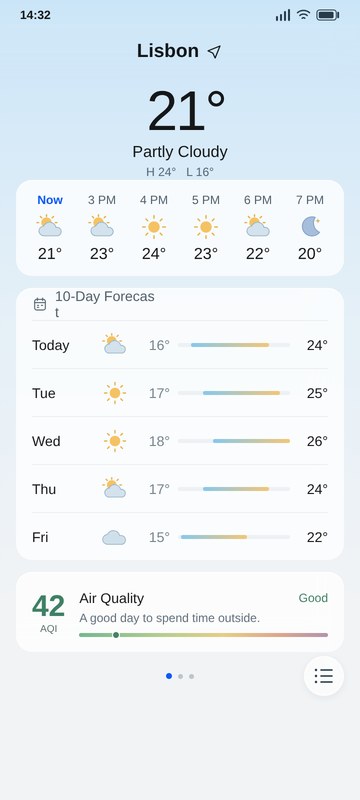
HarmonyOS weather page
the engine's exact label as corner marks
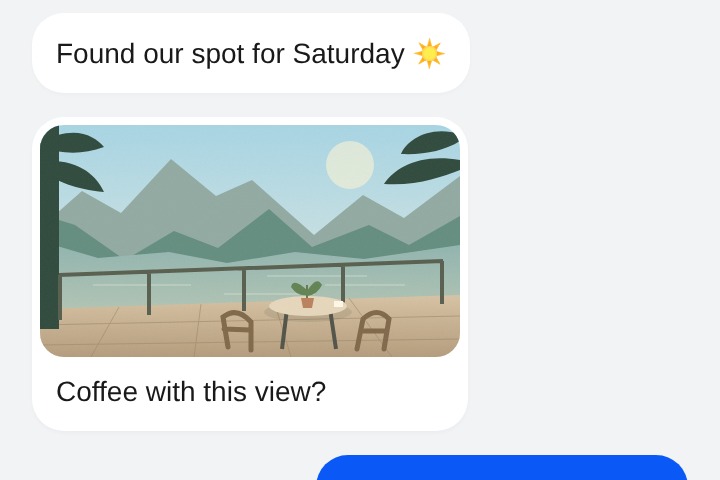
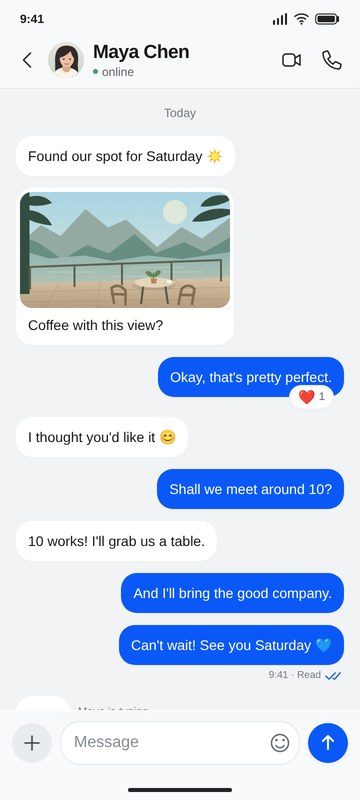
HarmonyOS chat page
nothing is wrong, so a critic should stay silent
A phone screen can be wrong in ways that need no reference: a label that runs off the screen, letters that touch, a line that breaks one character before its end, one button with sharp corners among round ones. We ask whether a model can box every such fault on a screenshot, given no target design and no reference image. Such a critic could serve as a cheap first pass over generated pages before a designer reviews them, but only if it stays silent on clean pages.
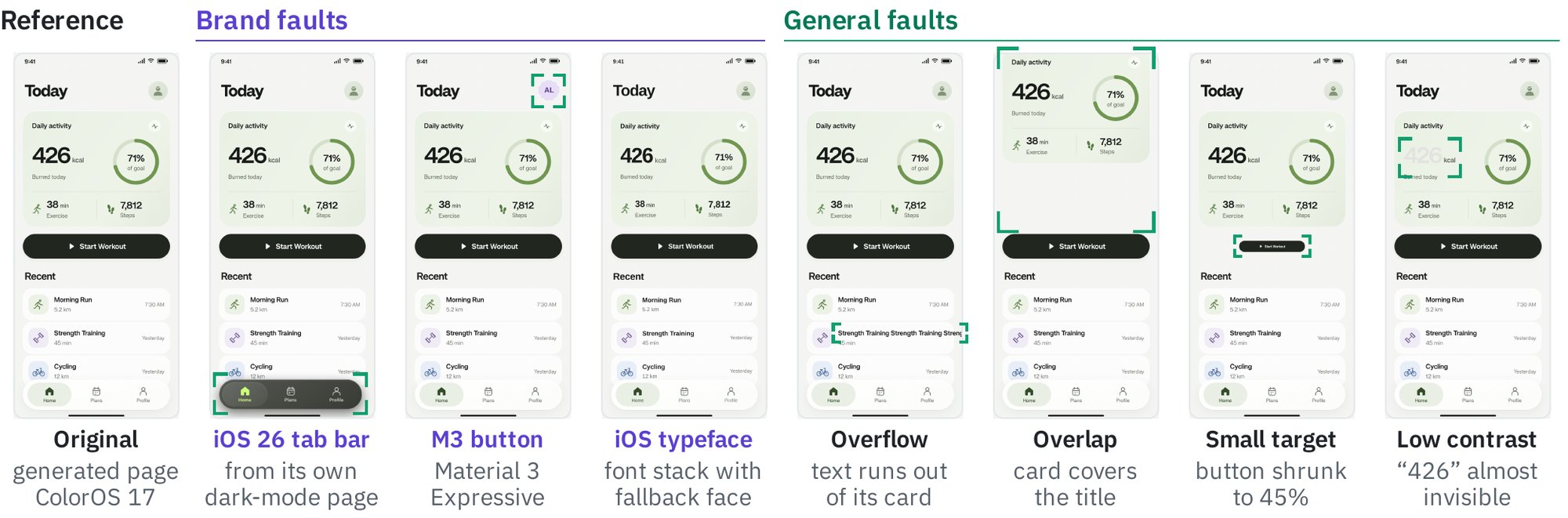
ScreenProof poses this target-free critique over three families of faults: general faults, local style faults (one element breaks the style its page sets) and text layout faults (letter spacing, line height, line breaks). A data engine makes each fault in page code and records the changed element's box, and hard negatives change every sibling alike.
No frontier judge is reliable: frontier models flag 18–62% of clean real screenshots and 18–82% of clean generated pages, find 47–72% of text layout faults, and rarely find a foreign icon (5–19%). A small baseline critic trained on ScreenProof-Train stays silent on clean pages and has the highest F1 on the consistency test, but still misses many local style and text layout faults.
The input is a screenshot and nothing else: no target design, no reference image, no specification. The output is a verdict (clean or faulty) and a set of findings, each with a box, the element type, the fault family and a short reason. For local style faults the page is its own reference: an element is wrong because it differs from its siblings, so no brand knowledge is needed.
Wrong in any design, visible without a target.
One element unlike the rest of its own page.
One text element set badly.
No test or validation page requirement occurs in the training set. Three page requirements per design language are held out for testing.
Faults are made in HTML page code, so the edit is the label. The engine makes exactly one change, reads the changed element's rendered box from the DOM, and re-renders the page identically on any machine.
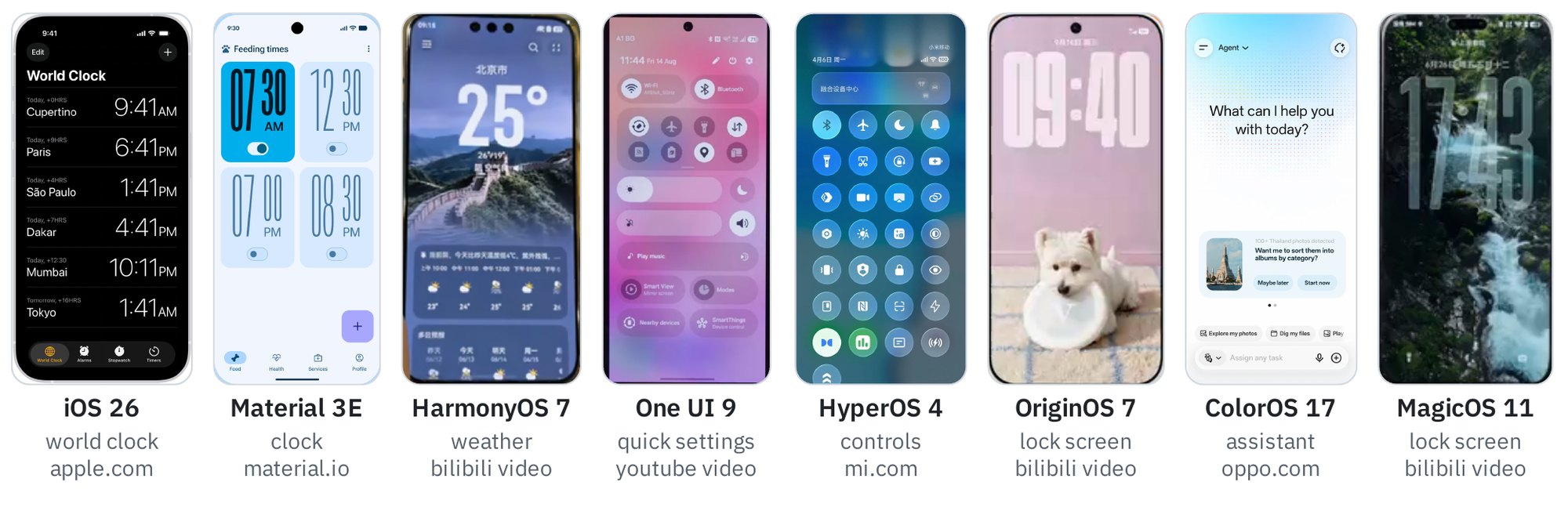
Real screenshots come from each vendor's own public pages: product and release pages, user guides, newsroom images and design-guideline sites. Every image is recorded in a manifest with its source page, date of collection, terms of use, size and hash. An image is kept only if it is a single portrait phone screen, and it is labelled with the system version its page names.
In the snapshot of 23 October 2026 the manifest held 8,755 images, of which 458 were accepted (352 with a named version). Screens from public UI datasets (3,327 files, mostly iOS-1K, Design2Code and Sketch2Code) are recorded in the same manifest with their licences.
A label has the same form as a model's answer. Boxes use 0–1000 screen coordinates.
{
  "verdict": "faulty",
  "findings": [{
    "box": [112, 408, 896, 452],
    "element": "list row",
    "family": "local style",
    "reason": "square corners; its sibling
               rows are rounded"
  }]
}
Illustrative example of the schema; the box values are not from a real item.
Five frontier models, nine open VLMs, the open base Qwen3.5-9B and our baseline ProofJudge, all with the same prompt and no target. Local models run greedy without thinking; API judges run at default reasoning. ProofJudge is trained on ScreenProof-Train and marked as our baseline.
| Judge | Real clean flagged ↓ |
Generated clean flagged ↓ |
Recall general ↑ |
Recall local style ↑ |
Precision ↑ | F1 ↑ | F1 @.3 ↑ | No answer ↓ |
|---|
2,765 screenshots, 607 clean (120 real, 487 generated); IoU ≥ 0.5. Red dot: over half of the clean pages flagged. Green bold: best in the column among judges that find faults. No answer: unparsable outputs, scored as finding nothing.
| Judge | Faults found ↑ | Clean flagged ↓ | Hard negatives flagged ↓ | Word broken ↑ | Needless ellipsis ↑ | Characters touch ↑ | Lone last word ↑ |
|---|---|---|---|---|---|---|---|
| Claude Opus 5.5 (medium) | 72% | 80% | 96% | 98% | 82% | 73% | 55% |
| gpt-6.1-sol | 54% | 49% | 68% | 100% | 81% | 27% | 25% |
| Gemini 4 Argon | 47% | 32% | 56% | 86% | 81% | 17% | 22% |
| ProofJudgebaseline | 43% | 15% | 13% | 94% | 96% | 5% | 14% |
367 faults, 75 clean pages, 71 hard negatives; IoU ≥ 0.5. At IoU ≥ 0.3: Opus 81%, gpt-6.1-sol 56%, Argon 51%, ProofJudge 44%. Opus finds the most faults but boxes almost every page.
| Judge | Recall ↑ | Normal flagged ↓ | Precision ↑ | F1 ↑ | Accuracy ↑ |
|---|---|---|---|---|---|
| API judges | |||||
| Gemini 4 Argon | 96% | 28% | 77% | 0.86 | 84% |
| Claude Opus 5.5 (medium) | 99% | 53% | 65% | 0.79 | 73% |
| gpt-6.1-sol | 100% | 63% | 61% | 0.76 | 68% |
| Gemini 3.8 Flash | 99% | 64% | 61% | 0.75 | 68% |
| Trained on ScreenProof-Train | |||||
| ProofJudgebaseline | 71% | 25% | 74% | 0.72 | 73% |
| Qwen3.5-9B base (no training) | 93% | 97% | 49% | 0.64 | 48% |
| Open VLMs, zero-shot | |||||
| GLM-4.6V | 98% | 66% | 60% | 0.74 | 66% |
| Qwen3-VL-8B | 76% | 33% | 70% | 0.73 | 72% |
| Qwen3.8-27B | 99% | 100% | 50% | 0.66 | 50% |
| Qwen3-VL-32B | 89% | 80% | 53% | 0.66 | 55% |
| Mistral-Small-3.2 | 98% | 99% | 50% | 0.66 | 50% |
| InternVL3.5-38B | 98% | 100% | 50% | 0.66 | 49% |
| InternVL3.5-8B | 93% | 93% | 50% | 0.65 | 50% |
| Qwen3-VL-30B-A3B | 52% | 57% | 48% | 0.50 | 48% |
| UI-TARS-1.5-7B | 3% | 1% | 67% | 0.05 | 51% |
OwlEye: 600 real Android screenshots, half with display issues; screen-level verdicts with the consistency prompt unchanged. Flagging every screen scores F1 0.67 and accuracy 50%, so read F1 together with normal screens flagged. Transfer: a judge's rank on the consistency test predicts its rank on OwlEye: Spearman ρ = 0.58 between the F1 scores and ρ = 0.91 between the shares of clean screens flagged (21 judges and variants).
ProofJudge is a small baseline critic for ScreenProof: Qwen3.5-9B with a LoRA, trained by SFT on ScreenProof-Train, that answers in the label format above. It keeps a finding only when it is confident. Its scores are in the leaderboard; its weights are released with the dataset.
@article{sun2026screenproof,
  title   = {ScreenProof: Where Is This Screen Wrong?
             Finding UI Faults Without a Reference},
  author  = {Sun, Huiming and Li, Yue and Yang, Kangning and
             Li, Ruineng and Cai, Jie and Fu, Lan and Fu, Yunwan and
             Li, Jinlong and Shen, Jinglin},
  journal = {arXiv preprint},
  year    = {2026}
}